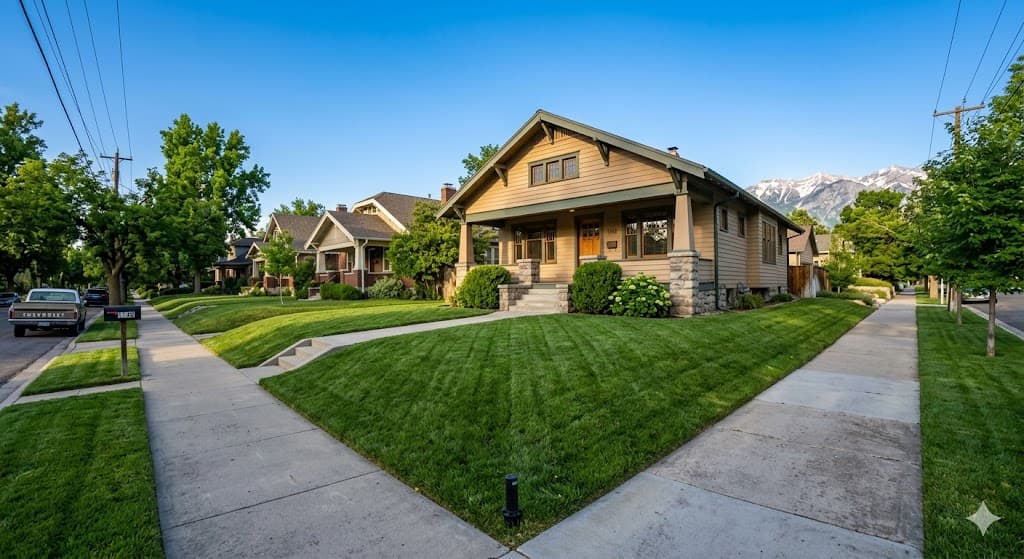
 Before
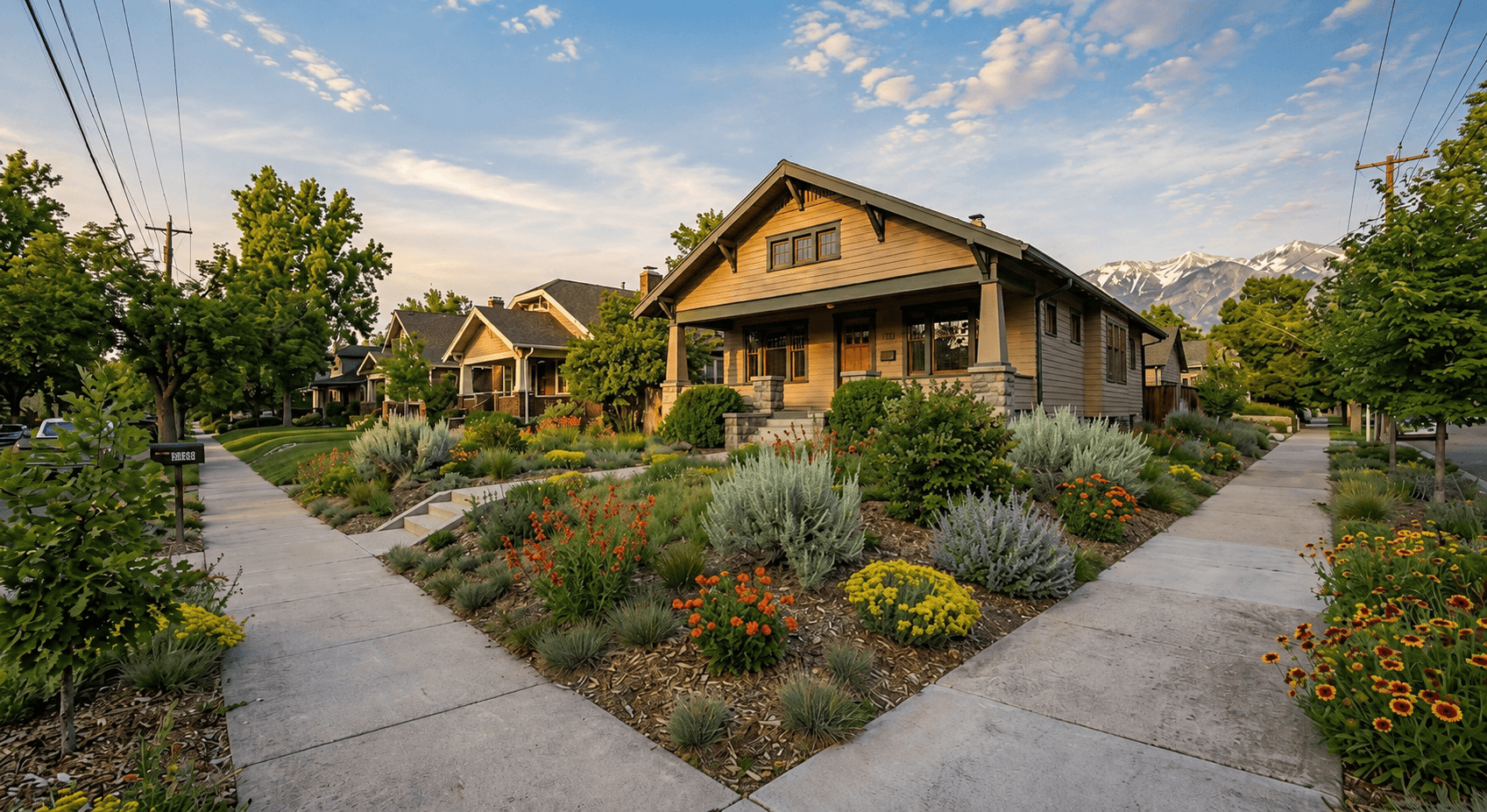 After
AfterThe Avenues
April 1, 2026
BeforeAfterA 1,400 sq ft Kentucky bluegrass front yard on a south-facing slope in the Avenues. The property is a 1920s bungalow at approximately 4,800 feet elevation — full sun, fast-draining, alkaline soil typical of the upper Avenues.
The existing landscape was Kentucky bluegrass with two non-native ornamental shrubs. The sprinkler system ran on a twice-weekly schedule from May through October. No landscape fabric had been installed, which simplified removal and accelerated establishment.
The homeowners came to us after receiving a water bill that doubled between 2024 and 2025 under SLC's tiered rate structure. They had been researching lawn replacement for two years.
The design centers on a Bouteloua gracilis (Blue Grama) meadow matrix with structural accents. Sixteen species total across four layers.
Groundcover and matrix grass: Bouteloua gracilis, Festuca idahoensis (Idaho Fescue)
Forbs: Penstemon eatonii (Eaton's Penstemon), Sphaeralcea coccinea (Scarlet Globemallow), Eriogonum umbellatum (Sulfur Buckwheat), Gaillardia aristata (Blanketflower), Ratibida columnifera (Prairie Coneflower), Lupinus argenteus (Silvery Lupine)
Shrubs: Artemisia tridentata (Basin Big Sagebrush), Salvia dorrii (Desert Sage), Cercocarpus ledifolius (Curl-leaf Mountain Mahogany), Amelanchier alnifolia (Saskatoon Serviceberry)
Accent grasses and sedges: Sporobolus airoides (Alkali Sacaton), Koeleria macrantha (Prairie Junegrass)
Trees: Quercus gambelii (Gambel Oak) — one specimen, southwest corner
All plants were sourced from nurseries growing from Intermountain West seed stock. No cultivars.
No synthetic amendments. Two inches of coarse wood chip mulch applied after planting. The existing soil had good structure — we amended only the planting holes for the two shrubs and the oak, using compost at a 1:3 ratio.
The bluegrass was removed via solarization over a six-week period in late summer 2025, followed by manual removal of remaining rhizomes. No herbicides.
Jordan Valley Water Conservancy District, $3.00/sq ft. Application filed at design stage. Rebate disbursed thirty days after post-install inspection. We handled all documentation.
Total: $4,200.
The Sphaeralcea and Penstemon eatonii established quickly — both were blooming by August. The Bouteloua gracilis matrix took longer to close in, as expected. By October, canopy cover across the bed was approximately 45%. By the following May, it exceeded 70%.
The homeowners documented a black-chinned hummingbird on the Penstemon eatonii the first summer. Several native bee species were observed foraging on the Eriogonum and Sphaeralcea by midsummer.
The sprinkler system was reconfigured to a once-weekly deep watering during the first establishment season. Year two: no supplemental irrigation after June.